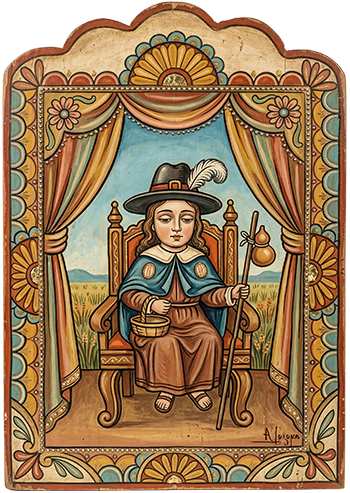
Early Life & Calling: Born in Rattenberg, Tyrol, Austria, around 1265, Notburga began her life as a kitchen maid for Count Henry I. Displaying deep piety from a young age, she developed a profound compassion for the poor, often sharing her own food and the Count's leftovers with the hungry, seeing Christ in their plight. Her calling was rooted in selfless service and unwavering charity, even when it meant defying her master's directives.
Acts of Devotion: Notburga is most famous for the "Miracle of the Sickle." When her master forbade her from giving food to the poor and ordered leftovers be fed to pigs, she threw her sickle into the air, declaring that if her actions were righteous, it would remain suspended. The sickle miraculously hung in mid-air as a divine sign. She was dismissed but later returned to serve her former mistress, continuing her charitable works, including miraculously providing fish during a famine.
Historical Impact: St. Notburga remains a powerful beacon of humble service, steadfast charity, and social justice within the global faith community. Her story inspires those who advocate for the dignity and rights of laborers and the poor, reminding believers that compassion and justice are central to Christian living, even in the face of authority. She is widely revered in agricultural regions, where her intercession is sought for bountiful harvests and protection from pests.
A House of Saints Prayer: Santa Notburga, kind spirit of the kitchen and field, you saw Christ in every hungry soul. Bless these hands that work the earth, these hearts that share their crust. Like your sickle held aloft, show us the path of true charity, that our cupboards never run empty for those in need, and our spirits stay strong, rooted in your humble grace. Amen.